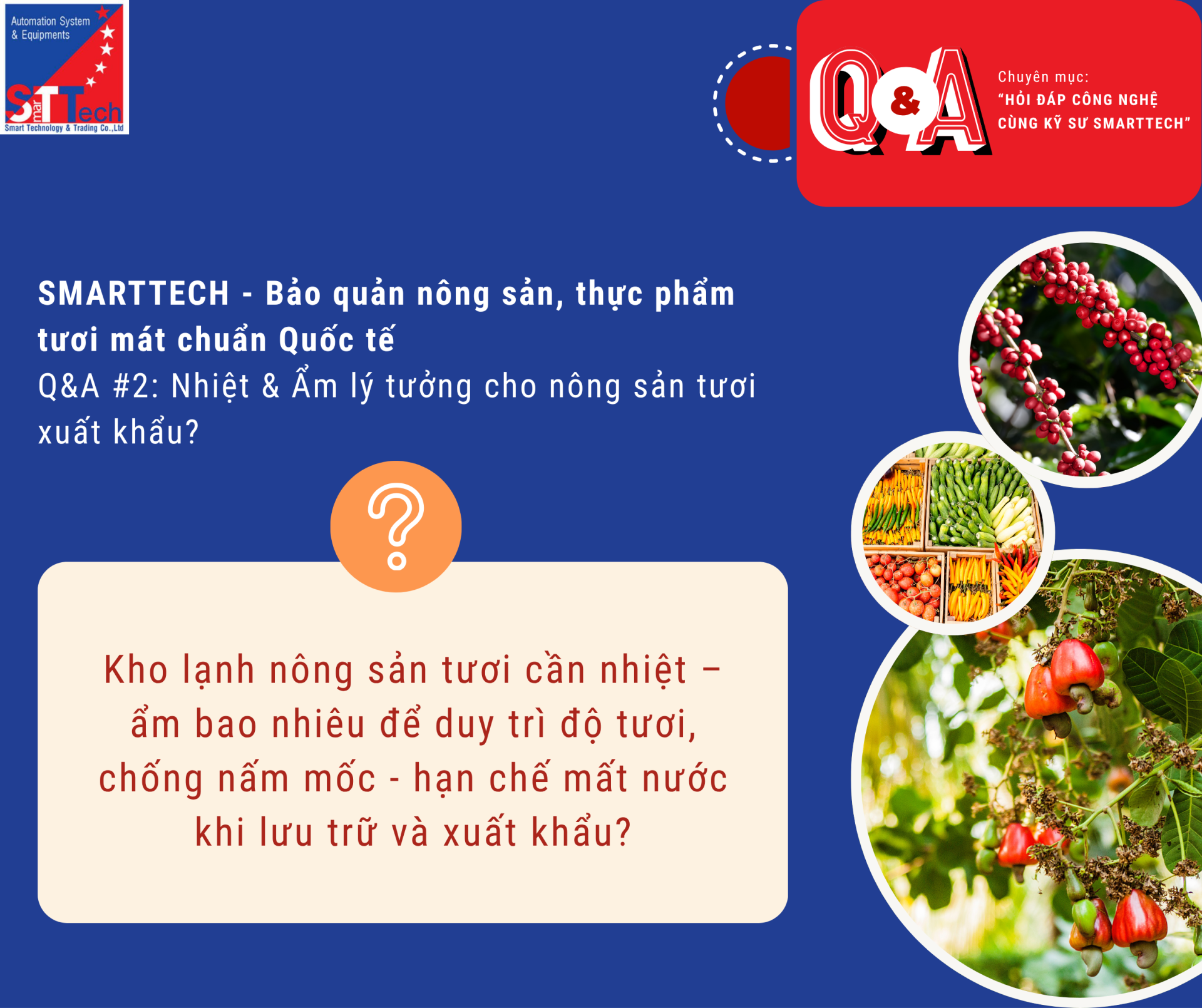
❓ Question
What temperature and humidity levels should be controlled in cold storage for fresh agricultural products to maintain freshness, prevent mold growth, and minimize water loss during storage and export?
Smarttech Expert Answer
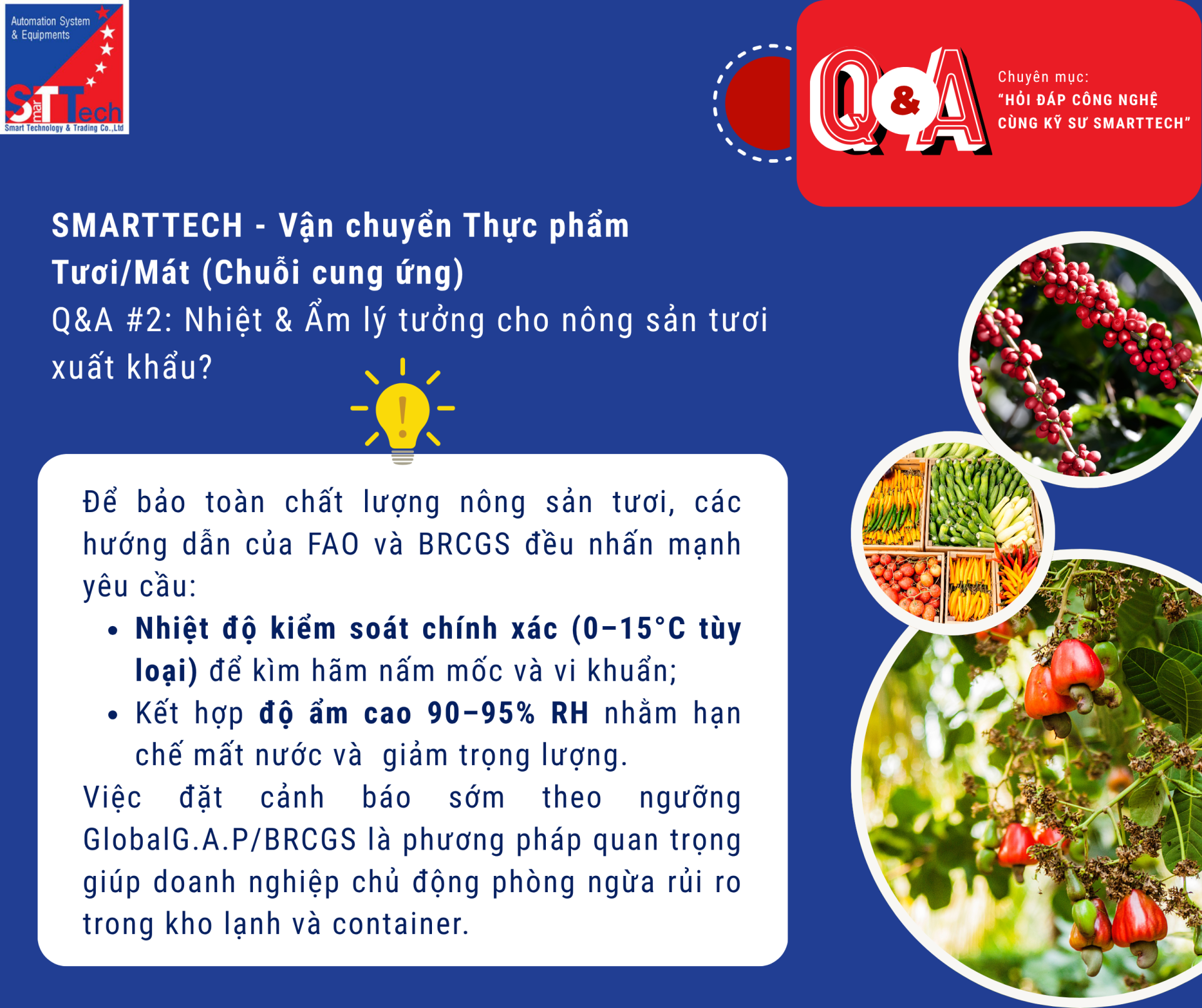
To preserve the quality of fresh agricultural products in cold storage and containers, international standards such as FAO, BRCGS, and GlobalG.A.P emphasize two core factors:
Temperature must be precisely controlled (usually between 0–15°C, depending on the type of agricultural product) to inhibit the growth of bacteria and mold.
High, stable humidity of 90–95% RH helps minimize water loss, prevent wilting, and reduce weight loss.
Beyond simply "keeping it cold," export businesses need to establish early warning systems according to BRCGS/GlobalG.A.P standards, allowing them to proactively address any fluctuations in the storage environment.
Modern smart temperature and humidity monitoring systems allow for the setting of narrow control thresholds, enabling early detection of even very small deviations. This is a key factor in ensuring compliance with international standards throughout the entire cold chain – from warehousing to transportation.
Reference Temperature & Humidity for each agricultural product group:
Leafy vegetables (lettuce, cabbage)
0–4°C
90–95% RH (very high)
Carrots, cucumbers
0–4°C
90–95% RH
Potatoes
3–10°C (or 7–10°C depending on intended use)
85–90% RH
Fresh Mushrooms
0–2°C
80–90% RH
Fruits (general group)
0–12°C (depending on type, prioritize maintaining a stable temperature)
Fresh Meat – Fish – Seafood
❄️ 1–3°C (refrigerated storage)
❄️ -18°C (frozen)
International Standard Cold Storage Principles
❄️ Low & Stable Temperature
→ Slows down biological respiration, reduces ripening, and extends freshness.
High Humidity (90–95%)
→ Prevents water loss, limits wilting and weight loss.
Good Ventilation
→ Avoids ethylene buildup (a gas that accelerates ripening) and reduces the risk of mold.
Limit strong light exposure
→ Reduces oxidation and discoloration of agricultural products.
⚠️ Important Note for Export Businesses
Each type of agricultural product has its own temperature and humidity requirements; a single standard should not be applied to all.
Using temperature and humidity data loggers allows for continuous 24/7 monitoring and early warning when thresholds are exceeded.
Recorded data serves as proof of compliance when working with partners, conducting quality checks, or exporting to demanding markets.
Smarttech Message
Preserving fresh agricultural products is not just about refrigeration,
but about controlling temperature and humidity with accurate, continuous data and early warnings.
SMARTTECH – Reliable Monitoring, Sustainable Development
Let SMARTTECH accompany your business on the journey to building a smart and sustainable supply chain.
Hotline: 1900 633 603 | 028 7300 3603
Website: www.smarttechco.com.vn
Zalo: 093 8733 596
Email: sales@smarttechco.com.vn